Uniformation Gk3 Ultra – Large Format Resin Printing Finally Gets Serious
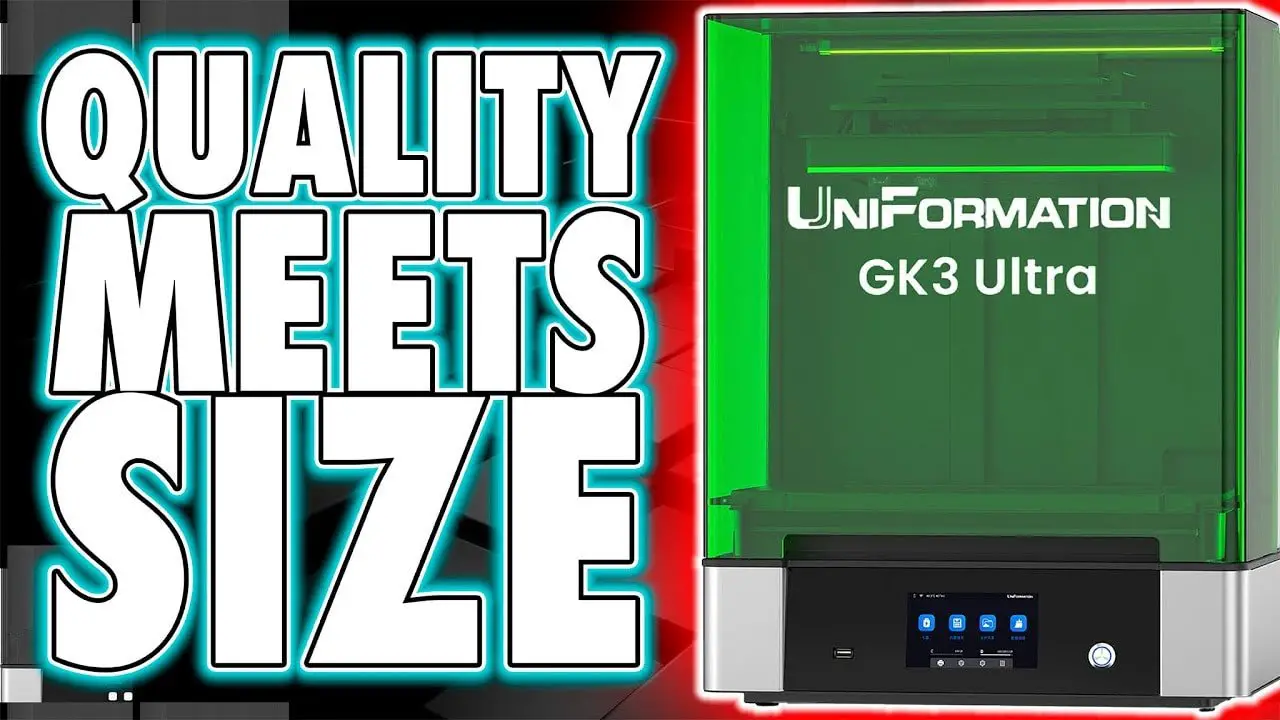
If you have been waiting for a genuinely high-resolution large-format resin printer that does more than just scale up an existing design, the Uniformation Gk3 Ultra is one of the most interesting machines to appear in quite some time.
This is a big printer, but more importantly it is a big printer aiming to keep the kind of print quality usually associated with much smaller machines. That alone makes it noteworthy. Add in the familiar Uniformation focus on user-friendly design, a heated chamber, a reworked vat and drip system, simplified maintenance, and an unusually tidy resin feed system, and the result is a machine that looks like it could become a very compelling option for makers, miniature hobbyists, prop builders, and print farms alike.
Before going too far, there is an important caveat. This is based on a prototype preview rather than a final retail review. Some parts on the sample machine were prototype components, some quirks were still being ironed out, and a few functions are still due to arrive via software updates. So treat this as an early hands-on assessment of what the Uniformation Gk3 Ultra is designed to be, not a final verdict on retail-ready hardware.
Even with that disclaimer in place, there is plenty here to get excited about.
Please Note: This site uses affiliate links. Our Affiliate Partners are shown below
(Affiliate links will result in compensation to the site on qualifying purchases)
Click this link & buy your hobby stuff from Element Games for the UK & Europe to support FauxHammer.com – Use Code “FAUX2768” at the checkout for double reward points.


Our Affiliates / Hobby Stores
- UK: Element Games, The Outpost, Wayland Games, Mighty Lancer, Goblin Gaming, Forbidden Planet, Model Scenery Supplies, eBay, Amazon
- US/Canada: MTechCave, GameKastle, eBay (US), eBay (CA), Amazon
- Germany: Taschengelddieb
- Europe: eBay (DE), eBay (FR), eBay (ES), eBay (IT), Amazon
- Australia: eBay, Amazon
- Global: RedGrass Games, Warcolours
- 3D Printers: Phrozen 3D, Elegoo, Anycubic
FauxHammer – Latest Video on YouTube
Uniformation Gk3 Ultra – Summary
The short version is this: the Uniformation Gk3 Ultra takes the design philosophy of the GK2 and scales it up into a much larger machine without sacrificing the reasons people liked the smaller printer in the first place.
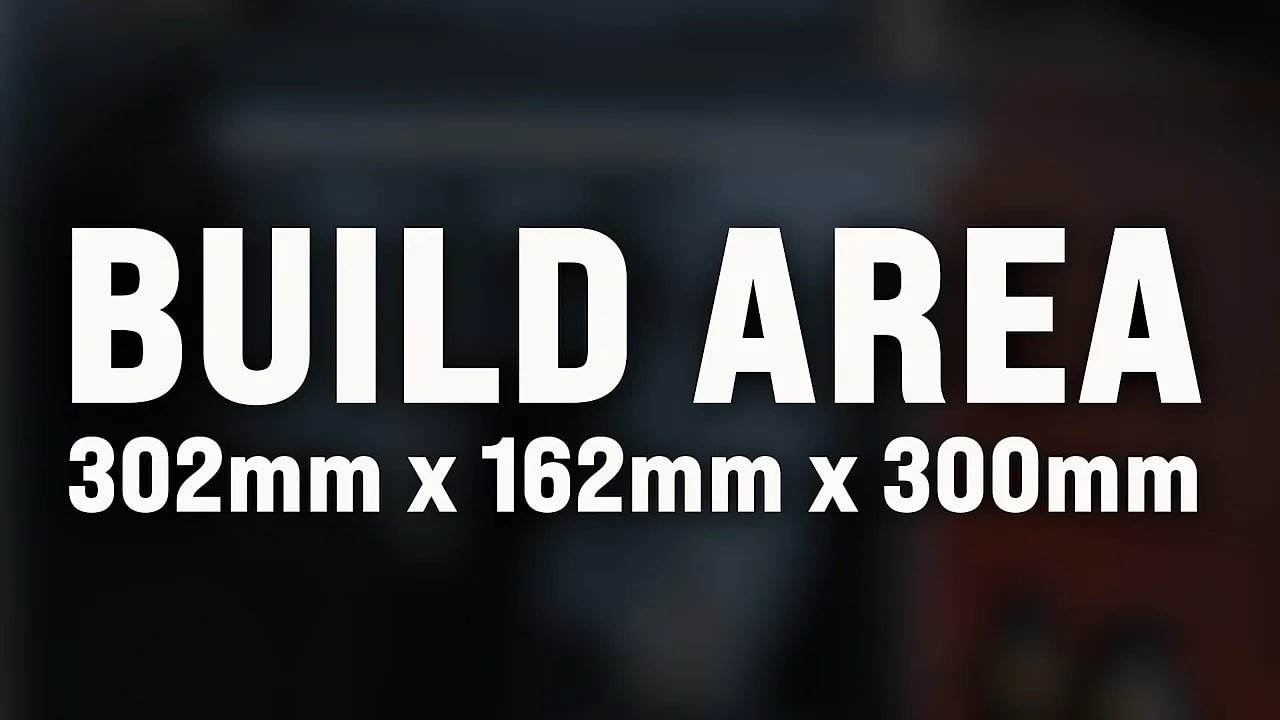
On paper, the headline feature is obvious. This is a 13.5-inch resin printer with a claimed 16K screen and a build volume of 302 x 162 x 300 mm. The more meaningful figure, however, is the actual effective resolution in use. Here the machine delivers an average voxel/cell size of 26 microns, which puts it dramatically ahead of previous large-format options and much closer to the quality people expect from modern 10-inch printers.
That is what makes the Uniformation Gk3 Ultra special. It is not merely “big”. Large resin printers already exist. The appeal here is that it appears to bring near-small-printer fidelity to a much larger canvas.
There are also thoughtful workflow details everywhere:
Heated chamber design for more stable resin temperature
Easy-access screen replacement
A hinged lid that can also be converted into a removable faceplate
Latch-mounted vat instead of fragile clips
A properly usable horizontal drip-tray arrangement
Optional automatic resin feed and purge system
Promised software upgrades including in-machine exposure testing improvements
If the final production version lands as intended, the Uniformation Gk3 Ultra could sit in a very interesting sweet spot between enthusiast luxury and practical production machine.
Uniformation Gk3 Ultra – Specs and What Actually Matters
As ever with resin printers, the marketing number gets all the attention, but the more useful way to judge a machine is to look at how the screen resolution and build area combine in practice.
Here are the key figures for the Uniformation Gk3 Ultra:
Build volume: 302 x 162 x 300 mm
LCD size: 13.5 inches
Resolution: 15,120 x 6,230 pixels
Claimed class: 16K
Pixel size: 20 microns on X, 26 microns on Y
AVC: 26 microns
Light source: Matrix LED UV array
Vat capacity: up to 1 litre in final version
Bottle capacity: up to 1.2 litres in the resin feed system
The “16K” label should always be taken with a pinch of salt because, like many current printers, the figure only applies to the X-axis. That is not unusual, but it is why the more meaningful metric here is the 26-micron AVC. In simple terms, that is what tells you the real level of detail you can expect across the print area.
For context, modern 10-inch 12K and 14K machines often sit around 24 microns. Previous large-format printers are much coarser. So while the Uniformation Gk3 Ultra is not quite matching the very best small-format machines, it is remarkably close, and far closer than large printers have any right to be.
That distinction matters because this is exactly the type of machine that can print large terrain, cosplay pieces, statue sections, big monsters, and oversized display models without making them look like they came off an older generation of hardware.
If you want to check current pricing or availability, the official product listing for the Uniformation Gk3 Ultra is the most relevant place to start.
Uniformation Gk3 Ultra – Design, Footprint, and Practical Usability
One of the reasons Uniformation printers tend to get a positive reception is that the company usually pays attention to day-to-day annoyances rather than chasing novelty for the sake of it. The Uniformation Gk3 Ultra seems to continue that trend.
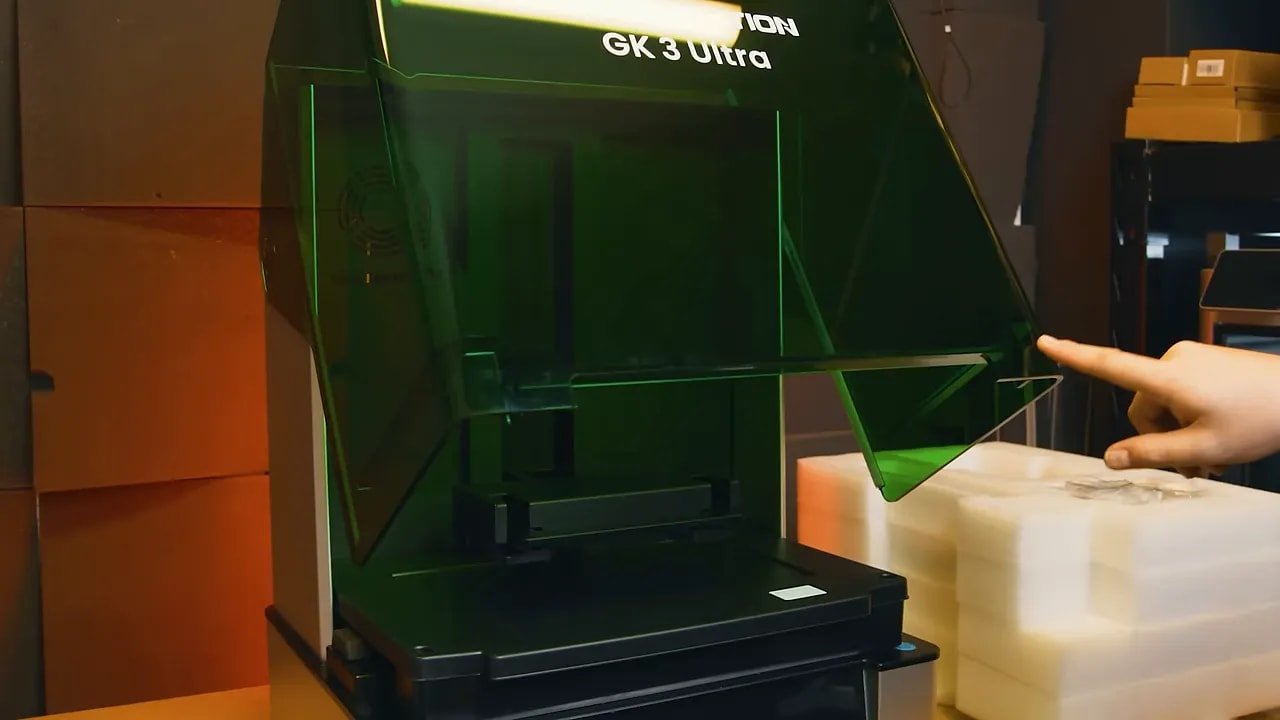
The printer uses a robust hinged lid that lifts up and over the machine. That already feels more modern than the GK2’s arrangement, but the clever bit is that Uniformation has also considered users who need to fit printers into shelves or racks. Remove the hinge screws and the lid can effectively become a removable faceplate, which should make the machine easier to integrate in tighter workspaces and print farm layouts.
You do need room for it though. With the lid open, the machine requires approximately:
77 cm of height
47 cm of depth
45 cm of width
So yes, this is still a substantial bit of kit. Anyone considering the Uniformation Gk3 Ultra for a home hobby room should measure first rather than assume.
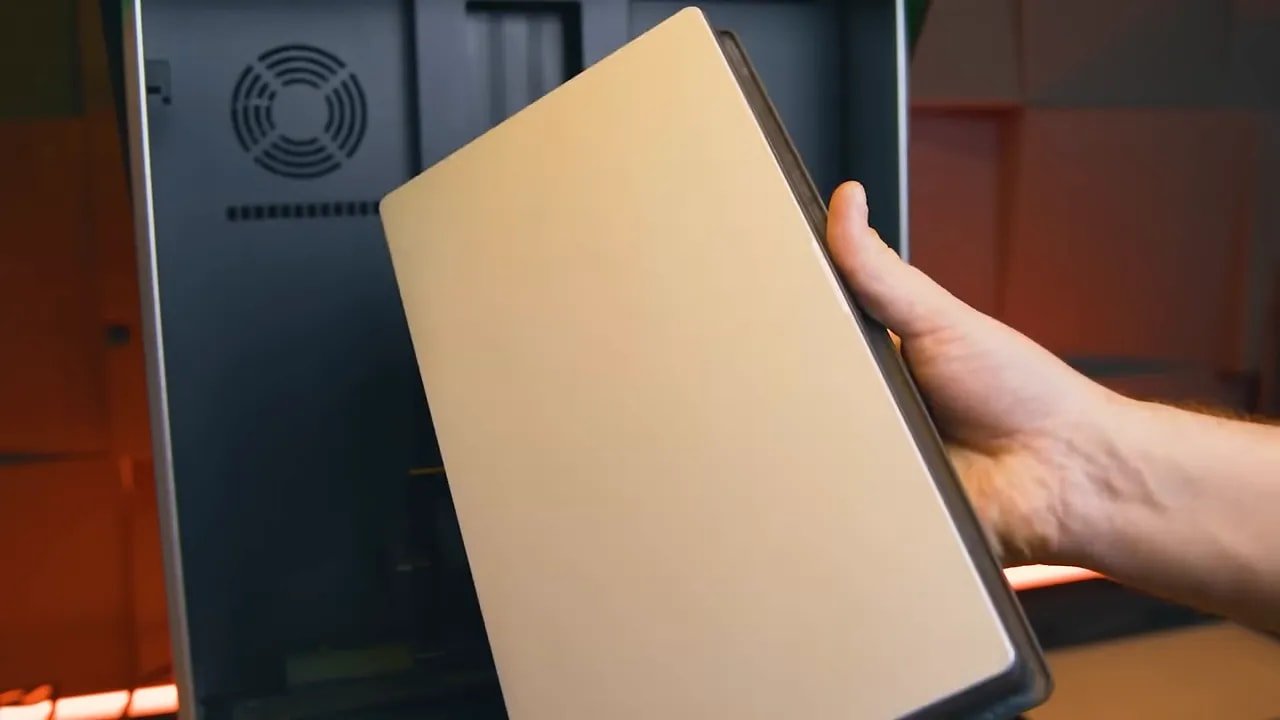
There is also a built-in handle for one-handed opening, plus draft-excluding side strips to help retain heat. On the prototype unit there was a gap in the handle area that could potentially let heat and fumes escape, but this was identified and is due to be fixed on production machines. That kind of thing is worth noting in a preview because it shows the difference between a prototype assessment and a final review.
Another small but welcome touch is the bullseye spirit level on the front-right corner, paired with adjustable feet. It is not glamorous, but practical details like that tend to make setup less irritating.
Uniformation Gk3 Ultra – Build Plate, Z System, and Vat Design
Moving inside, the Uniformation Gk3 Ultra keeps the broad GK2 design language but scales it up considerably.
The build plate is large and designed to avoid the usual nuisance of resin collecting on the top surface. The levelling mechanism is now located on the Z-arm rather than the plate itself. In practice, this sounds like a small change, but it should make adjustment easier because the screws are more visible and accessible.
There is no automatic levelling here, but that is hardly a criticism. “Auto-level” claims on resin printers are often less meaningful than they sound. In this case, the machine comes pre-levelled, which is probably the more useful approach anyway.
The build plate itself clips onto the Z-arm with a large lever, which should help with one-handed operation during print removal and post-processing.
On the motion side, the machine uses:
Dual linear rails
A ball screw rather than a lead screw
These parts are covered to protect them from stray resin contamination, which is another very sensible design choice. Resin splashes and drips are one of the easiest ways to shorten the life of a printer’s moving parts, so enclosing the mechanism is exactly the kind of engineering decision you want to see.
The vat itself is large, and the final version is intended to support up to 1 litre of resin. Better still, it mounts using latches on a thick metal frame rather than fragile clips. That should make removal more secure and more durable over time.
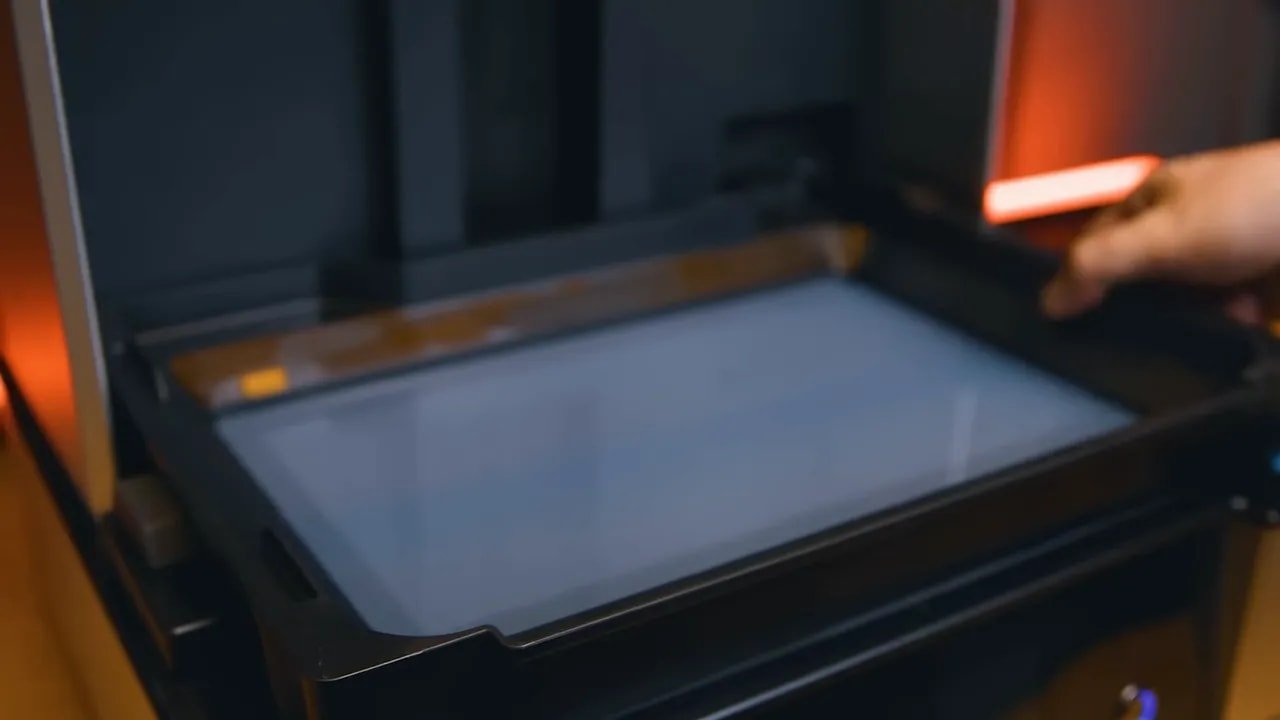
Uniformation was still deciding whether the retail machine would ship with PFA or ACF film by default at the time of the preview, though the later note in the description indicates the final choice ended up being PFA based on community feedback.
That is probably the more broadly appealing decision. ACF can reduce peel forces and improve speed, but it also tends to leave more visible surface marks. On a printer this large, ACF arguably makes more sense for large practical prints where tiny cosmetic marks are less important, but for mixed use, PFA is the safer standard option.
Uniformation Gk3 Ultra – Heated Chamber and Screen Maintenance
The heater remains one of Uniformation’s signature features, and it returns in the Uniformation Gk3 Ultra with a chamber-heating approach rather than a heated vat.
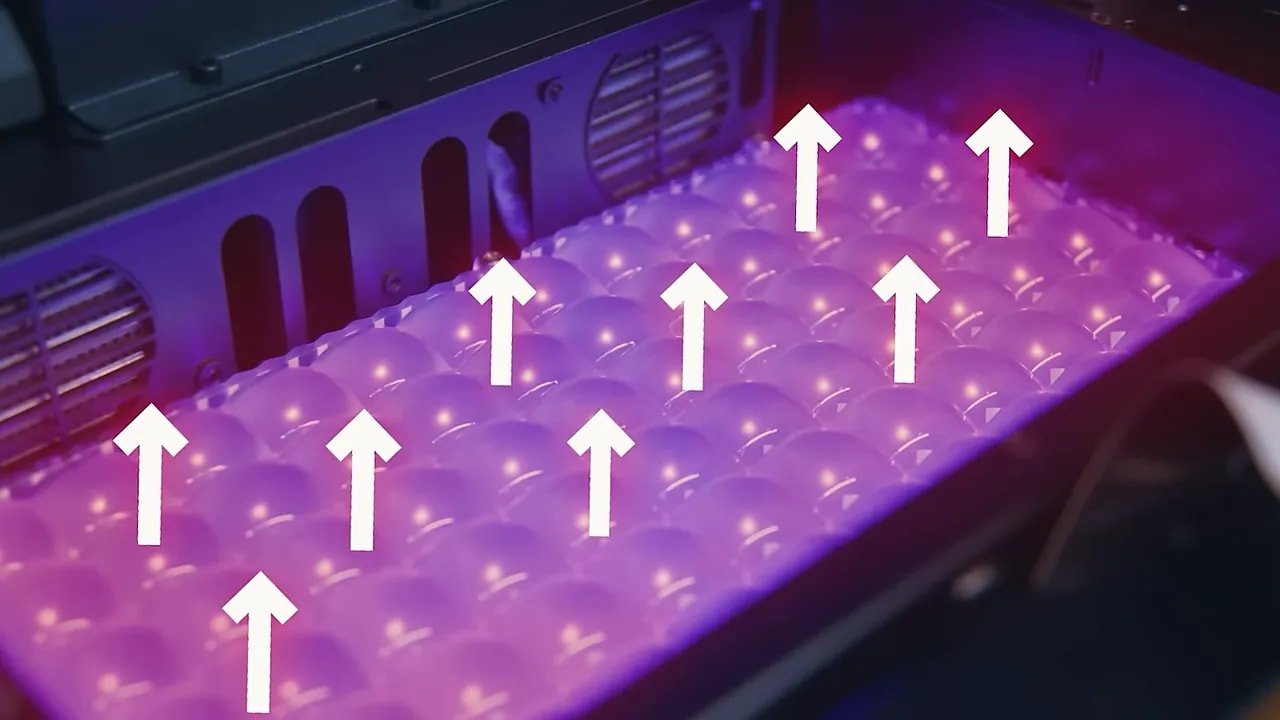
Instead of warming resin from the sides, the printer heats the chamber below the LCD so heat rises through the screen and warms the resin from underneath. The printer monitors temperature using a small sensor within the LCD frame area.
The argument for this approach is consistency. A heated vat can create uneven temperature distribution because heat enters from the sides. Heating the chamber below is intended to give a more even spread across the resin surface. That logic sounds reasonable, and in use the thermal spread appeared fairly even on the sample machine.
Of course, any time you talk about adding heat near an LCD, someone will raise concerns about component lifespan. That concern is not entirely wrong, but the practical answer matters more than the abstract one. This system is operating around 30°C, not some absurd temperature, and LCDs in resin printers are consumable parts anyway.

More importantly, if you do need to replace the screen, the Uniformation Gk3 Ultra appears designed to make that far less painful than usual. The process is essentially:
Unscrew the screen
Disconnect the ribbon cable
Install the new screen
That sort of maintenance-friendly design is easy to underestimate until you actually have to do it. Resin printing is messy enough already. Anything that removes unnecessary disassembly is a genuine benefit.
Uniformation Gk3 Ultra – Software, UI, and Upcoming Features
At the time of the preview, the software interface on the Uniformation Gk3 Ultra was essentially the same UI seen on the GK2. That means it is functional, but a bit basic by current standards.
The workflow is straightforward enough. Insert a USB drive, choose a file, and the printer copies it to internal storage while verifying its integrity. After that, the USB drive can be removed while the print continues.
The printer includes 7GB of internal storage, and that storage can be exposed as a network drive on a PC. Files can therefore be transferred over Ethernet or using the included USB Wi-Fi dongle.
More importantly, Uniformation is working on tighter integration with both Chitubox and Lychee so that the Uniformation Gk3 Ultra can eventually support a more modern remote workflow:
Send files from the slicer
Start prints remotely
Monitor progress remotely
There are also two software features on the roadmap that sound especially useful:
Editing sliced file settings directly from the printer UI
Running multiple exposure tests in a single print
That second feature could be genuinely excellent. Exposure testing is one of the most repetitive parts of dialling in a new resin, and being able to test multiple settings in one go would save both time and material.
If you are new to tuning resin printers in general, the beginner resin printing guide from FauxHammer is a useful companion resource, and the Photonsters Exposure Range Finder is still one of the most practical calibration tools around.
Uniformation Gk3 Ultra – New Features Beyond the GK2
Although the broad feel of the Uniformation Gk3 Ultra is “GK2 but much bigger”, it does introduce a couple of new features.
The first is a top-mounted LED light bar positioned above the vat and behind the print area. That sounds minor, but internal lighting can be surprisingly useful on a large resin printer when checking resin level, looking for debris, or simply seeing what is going on without a torch in one hand.
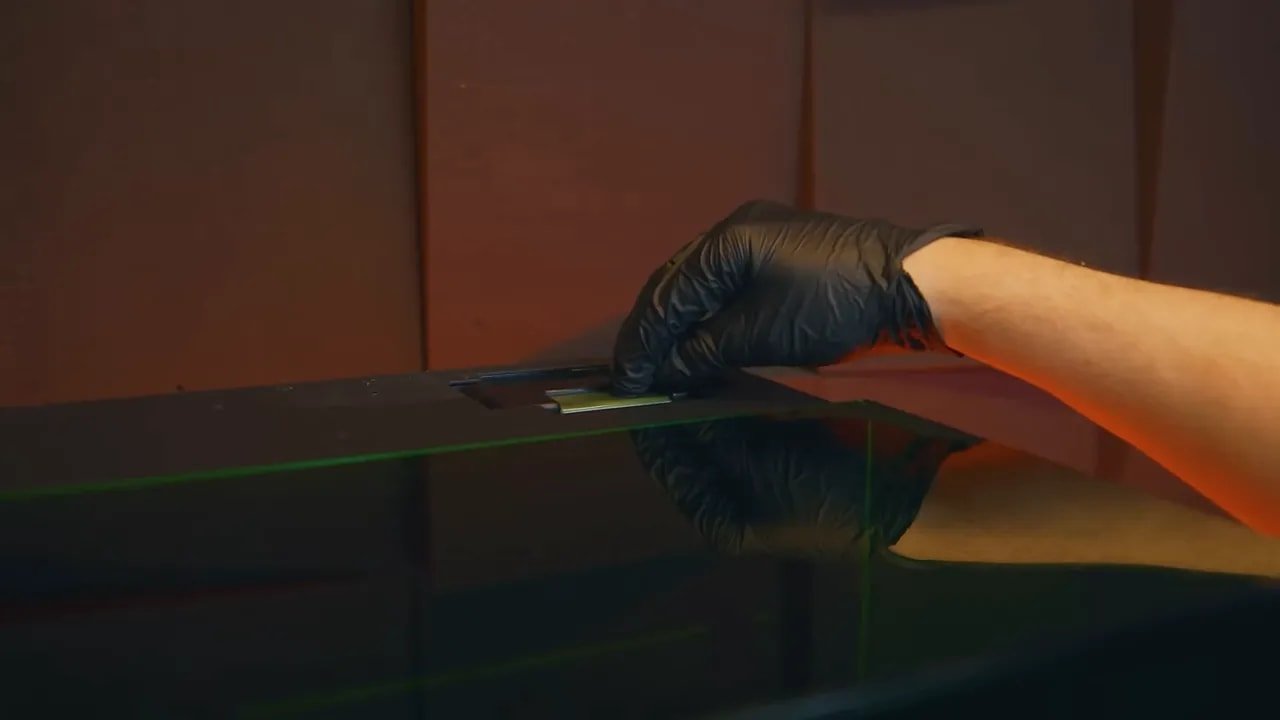
The second, and much more significant, addition is the integrated resin handling system.
This is where the Uniformation Gk3 Ultra starts to look less like a hobby machine that merely happens to be large, and more like a printer trying to improve workflow at a system level.
Uniformation Gk3 Ultra – Resin Feed System and Why It Stands Out
Automatic resin pumps are not universally loved, and for good reason. Many are fiddly, messy, locked to specific bottle types, or too slow to feel worth the trouble. The version used in the Uniformation Gk3 Ultra appears to solve several of the common complaints.
The printer comes with an empty storage bottle that can be filled with your resin of choice using the included spout. Uniformation also offers its own square resin cassettes. Either way, the bottle plugs into the printer at the rear top section and is then pressurised, which helps ensure the resin is fully pumped out.
The biggest benefit is cleanliness. When the bottle is removed, it does not leave drips and leaks everywhere. That alone makes the system more attractive than many competing approaches.
There is more to it than simple topping up too. The system can:
Pressurise the bottle
Purge the lines
Reduce cross-contamination between resin types
Be flushed with cleaning solution if desired
Estimate remaining resin by weighing the bottle
That weighing function ties into the UI so the machine can estimate how much resin is available at any point. It also includes a calibration function, and in early use the estimate appeared fairly accurate.
Perhaps the cleverest part is that the printer only refills the vat when resin gets low, rather than maintaining a full vat all the time. That should make heating more efficient because a smaller amount of resin needs to be kept warm.
For anyone printing miniatures with specialist materials, a resin such as Wargamer resin is specifically relevant here because it was used for some of the large sample prints discussed later.
Uniformation Gk3 Ultra – Resin Warnings, Pauses, and Real-World Logic
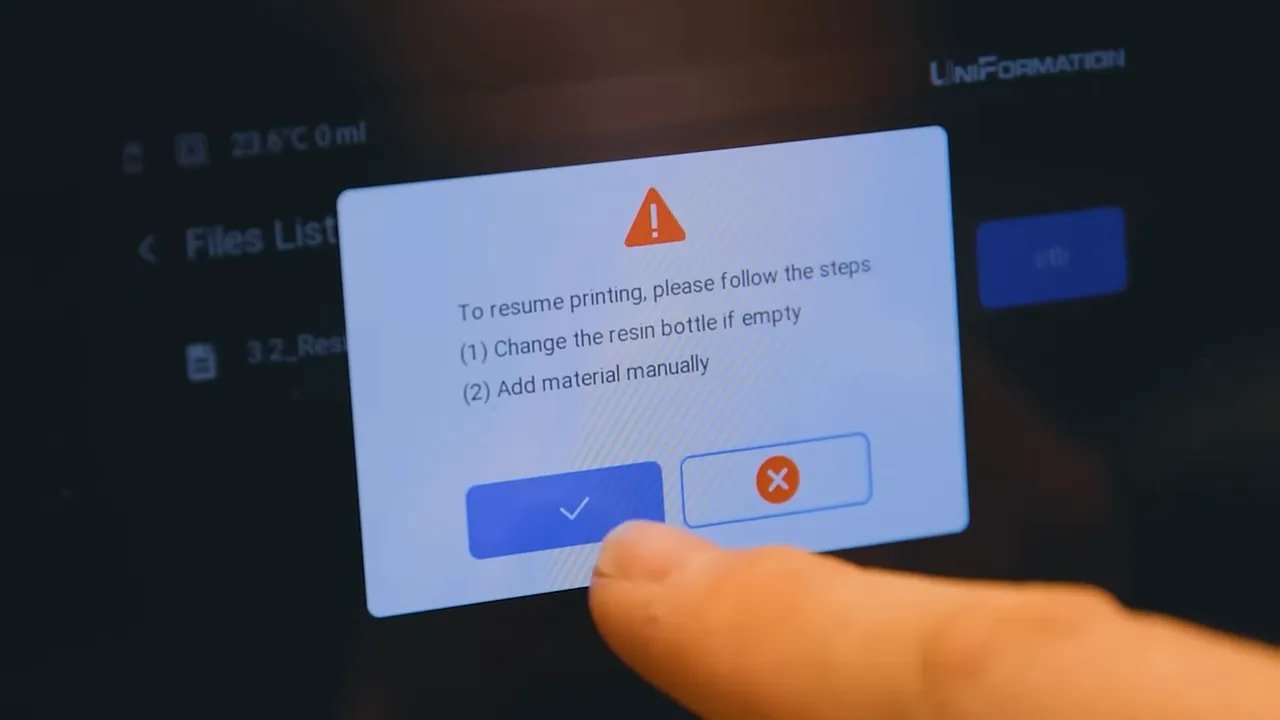
One of the more interesting points raised around the Uniformation Gk3 Ultra is how it handles resin volume warnings.
Before a print starts, the printer compares the estimated resin required by the sliced file against the amount available in the bottle. If there is not enough, it warns you before starting.
At first glance, you might think the printer should simply begin the job and pause when the bottle runs out so you can swap in another one. In theory that sounds convenient. In practice, a mid-print pause on a resin printer can introduce visible layer lines or defects because the print ends up sitting still while resin temperature shifts and the exposed layers remain idle in the vat.
So the warning system is actually trying to protect print quality rather than merely nagging the user.
There are some practical numbers worth keeping in mind:
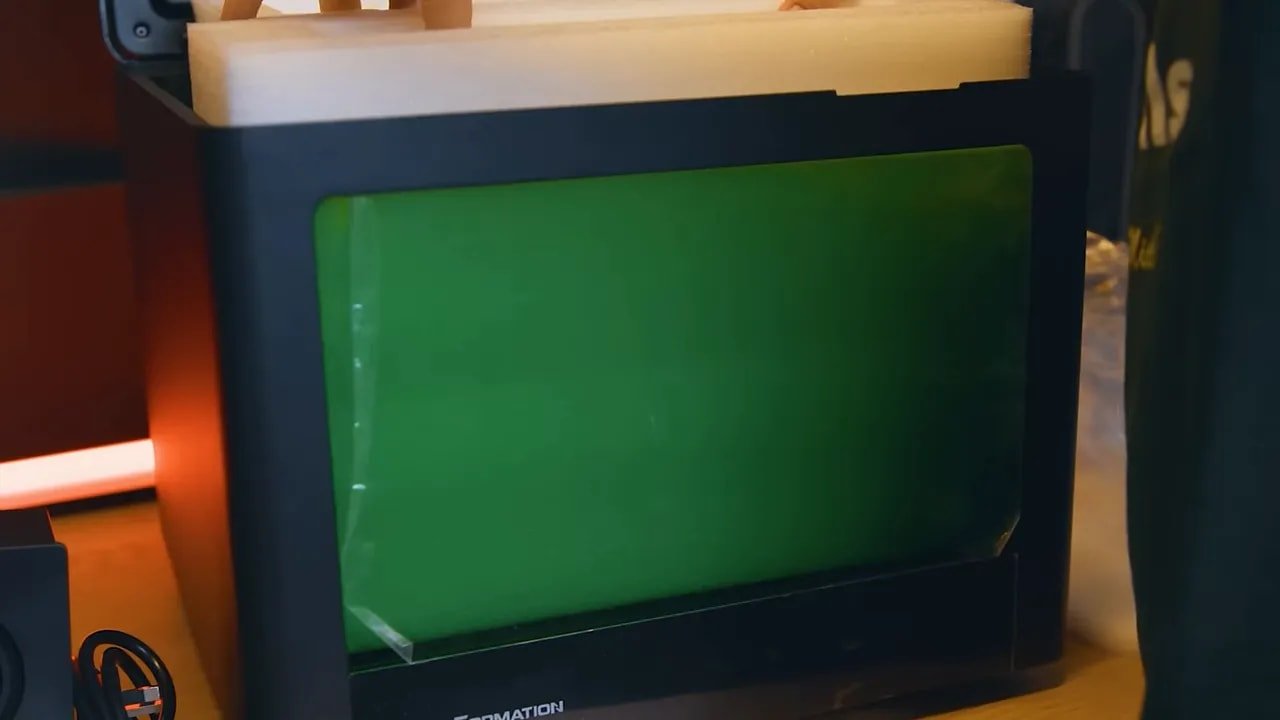
The bottle can hold up to 1.2 litres
The vat can hold up to 1 litre
That gives a rough maximum available total of 2.2 litres
That is a huge amount of resin for a single print, even on a machine this size. If you somehow need more than that, you are well beyond normal hobby printing and into planning-heavy territory anyway.
The best part is that none of this automation is mandatory. You can disable the resin system entirely and just use the Uniformation Gk3 Ultra like a conventional manually filled printer. Even with the system active, you can ignore the warnings and continue if you prefer.
That optionality is exactly what you want. Automation should be available, not compulsory.
Uniformation Gk3 Ultra – Wash and Cure Ecosystem
Large printers need large post-processing gear, and Uniformation has paired the Uniformation Gk3 Ultra with bigger wash and cure accessories.
The cure station is simple enough: a larger version of the company’s previous cure unit. It includes UV lights, a turntable, front controls, and compatibility with Uniformation’s filter cartridges mounted at the rear. It also has a heating function for drying, although even Uniformation reportedly recommends pre-drying models with a hair dryer, which rather tells you how much confidence to place in the built-in drying mode alone.
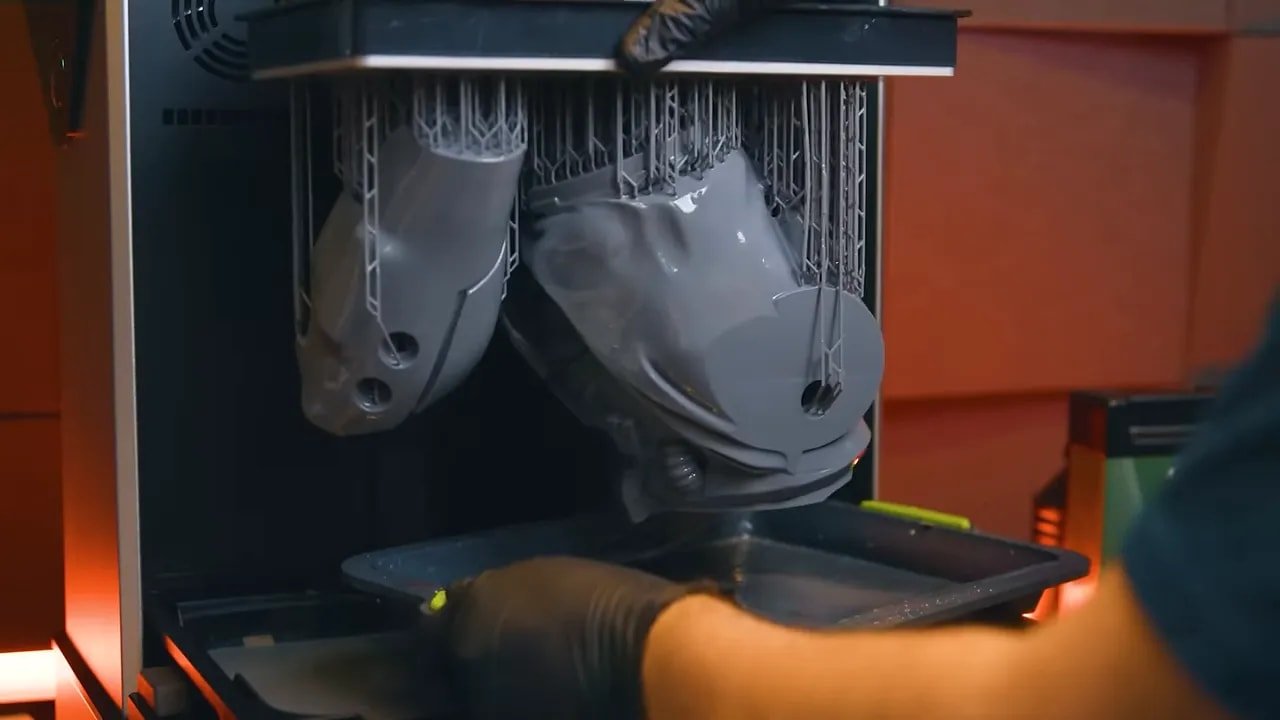
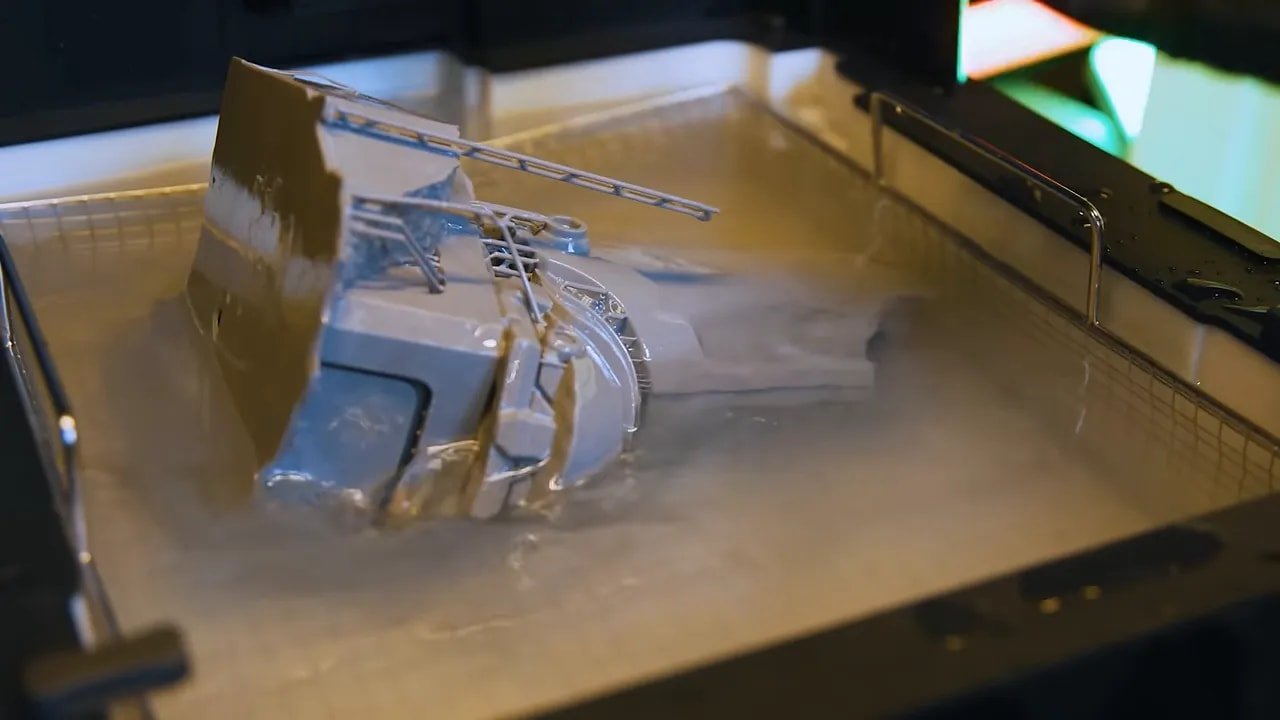
The wash station is the more ambitious part of the ecosystem. The idea is that large external buckets supply liquid to the wash chamber, which then fills automatically. The build plate is lowered into the liquid, washed with an impeller for up to three minutes, lifted out, rotated 180 degrees, and submerged again for another cycle before the fluid drains back into the container.
You can also use an included basket for loose parts, much like other resin cleaning systems.
That all sounds useful for large-format prints, though it was not fully operational in the preview setup, so this remains an area where a final retail review will matter more than a first look.
Uniformation Gk3 Ultra – Print Quality and What It Means for Miniatures
The central question with the Uniformation Gk3 Ultra is simple enough: does this giant build area still deliver print quality worth caring about?
From the early prints shown, the answer appears to be yes.
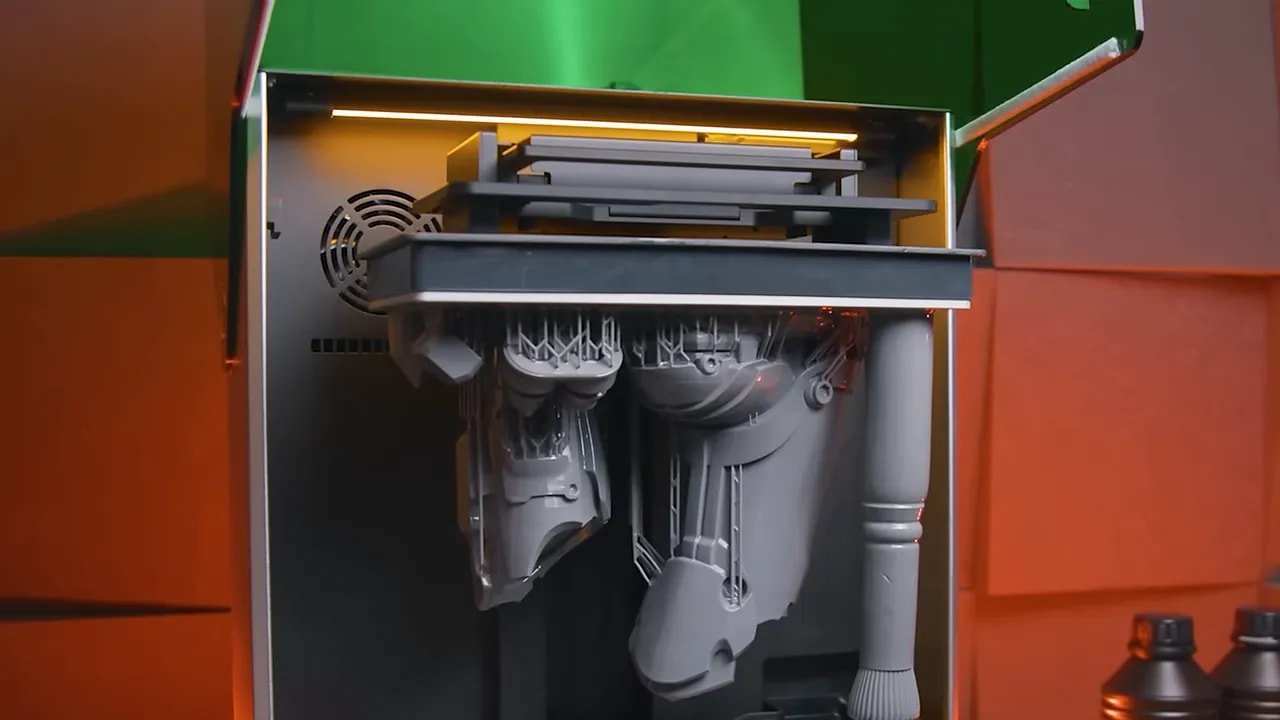
Test prints included a miniature version of Titan Forge’s Lord Narcissus, then a larger version, and eventually parts for an absurdly oversized version simply because the machine made that possible. That says a lot about the sort of freedom this printer offers. It is not just about fitting more parts on one plate. It is about being able to scale projects into categories that smaller printers simply cannot handle without splitting everything into excessive sections.
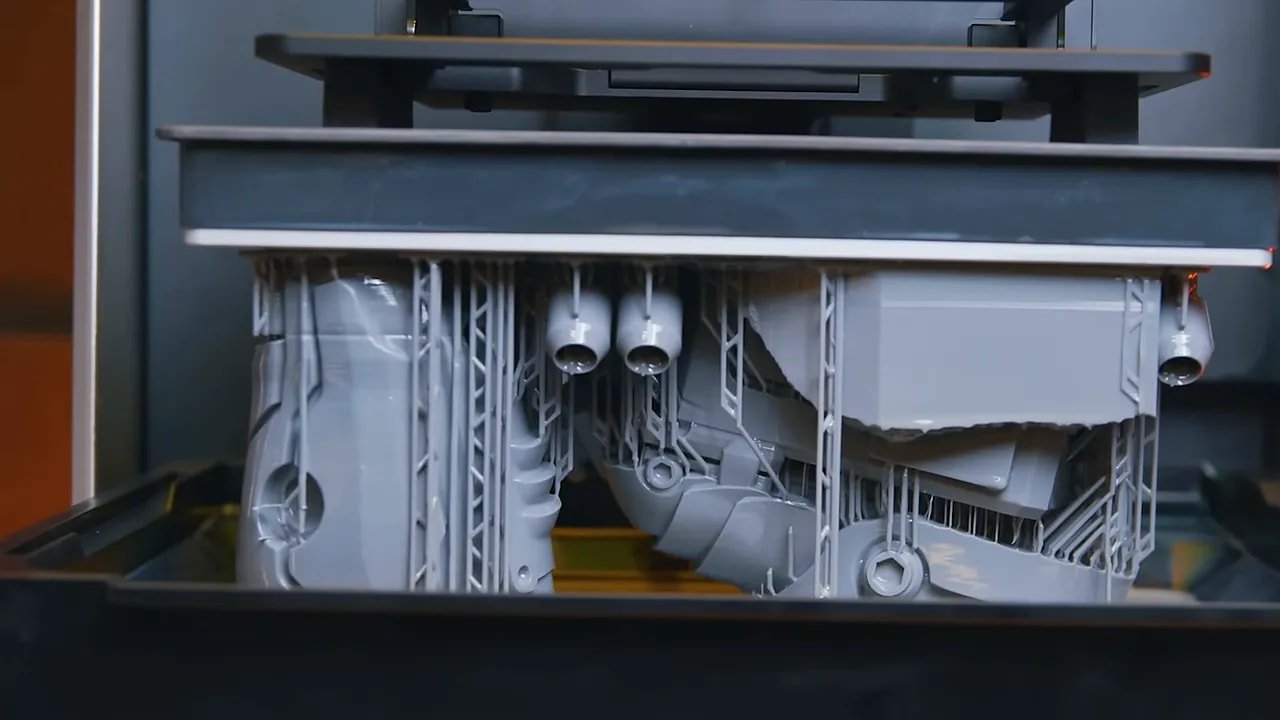
Additional exposure testing was done using Phrozen Hyperfine resin to evaluate XY accuracy, and the results were said to compare favourably with smaller 8K to 14K machines. That is perhaps the biggest compliment the Uniformation Gk3 Ultra could receive at this stage. Not “good for a large printer”, but genuinely comparable to far smaller high-detail machines.
That does not necessarily mean every buyer should use this as a pure miniature printer. In fact, most people probably should not. The value of a machine like this is that it can do miniatures and much larger projects at a quality level that does not feel like a compromise.
For people who want files to really push a machine like this, the huge pre-supported catalogues from Loot Studios Fantasy, Loot Studios Sci-Fi, and the free mini pack are all relevant sources of printable models.
Uniformation Gk3 Ultra – Speed, Workflow, and Who This Printer Is Really For
Speed claims for resin printers are often a bit daft, and the Uniformation Gk3 Ultra wisely seems not to lean too hard into them.
The quoted figure is 30 mm/hour at 0.1 mm layer height, which is one of those benchmark figures brands like to use even though it does not reflect how most people actually print. A more practical number is 60 mm/hour at 50-micron layers.
Even then, Uniformation has reportedly prioritised print quality over outright speed on this machine.
That feels like the correct decision. At this size, a failed print costs real time, real resin, and potentially real money. Chasing headline speed while compromising consistency would be a poor trade.
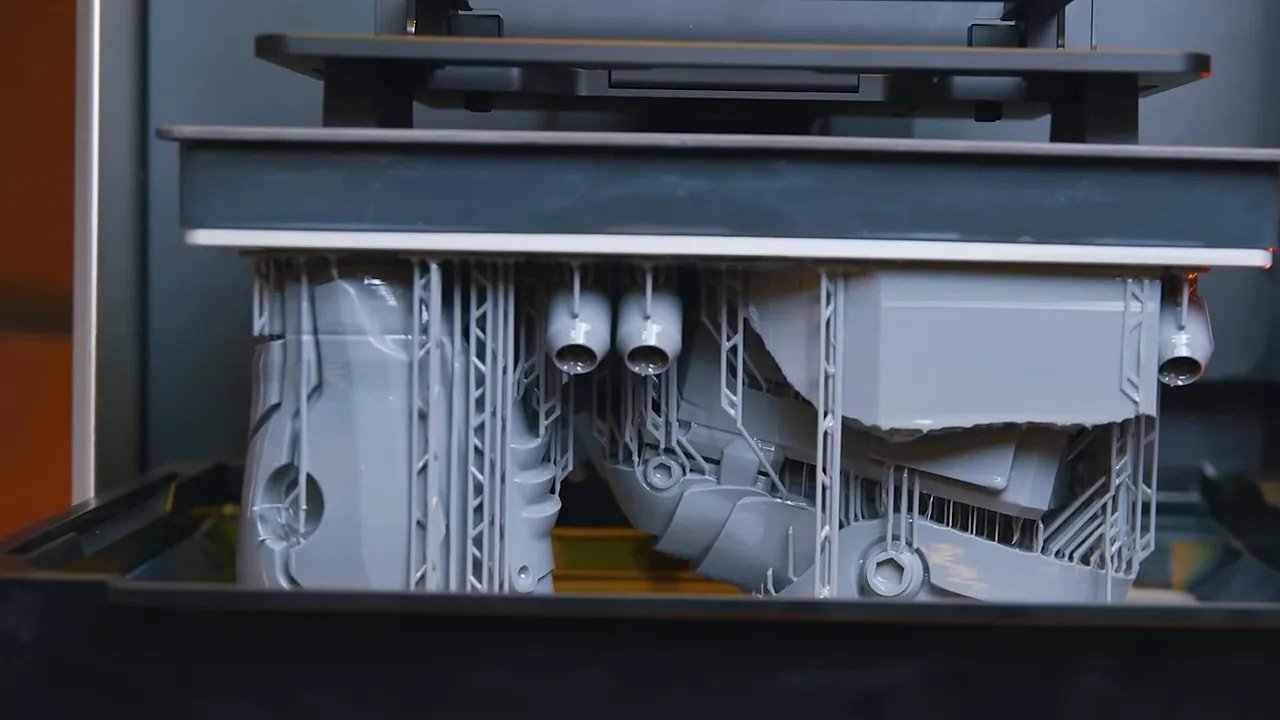
So who is the Uniformation Gk3 Ultra really for?
Large-scale miniature and terrain makers who want high fidelity on big pieces
Statue and bust printers who are tired of excessive part splitting
Print farms looking for a practical large-format machine with cleaner workflow tools
Experienced resin users who already understand post-processing, supports, and material handling
It is less obviously ideal for:
Complete beginners who are just learning resin printing
Users with very limited workspace
People who only print small single miniatures and have no need for the larger format
If your priority is only the best possible small-miniature output and you never print anything large, a smaller premium printer may still make more sense. But if you want one machine that can tackle huge jobs without dropping back to old-generation large-printer quality, that is where the Uniformation Gk3 Ultra becomes very compelling.
Uniformation Gk3 Ultra – Price and Value
Pricing is where this preview becomes especially interesting.
The early announced pricing structure for the Uniformation Gk3 Ultra was:
$999.99 during the super early pre-order window
$1,199 after the earliest pre-order phase
$1,299 standard retail price on release
That launch pricing is aggressive, particularly when you consider the combination of build size, resolution, integrated heating, and resin system. Put beside the GK2’s earlier pricing, it makes the jump to the Uniformation Gk3 Ultra look surprisingly attainable for anyone already considering a premium resin setup.

As always, value depends on use case. If you only ever print 32 mm infantry, this is overkill. If you print display pieces, monsters, terrain sections, production runs, or anything that benefits from a large uninterrupted build area, the value proposition becomes much easier to understand.
There is also a broader category context here. If you are comparing this machine with other options, FauxHammer’s list of the best 3D printers for miniatures is a useful reference point.
Uniformation Gk3 Ultra – Pros and Cons
No preview would be complete without a balanced summary of the obvious strengths and possible drawbacks.
Pros
Excellent effective resolution for such a large printer
Huge 302 x 162 x 300 mm build volume
Heated chamber should improve resin consistency
Easy screen replacement design
Thoughtful vat latch and horizontal drip-tray setup
Optional resin automation appears unusually clean and practical
Good future potential via software updates
Strong early price positioning
Cons
This assessment is based on prototype hardware, not final retail units
Large physical footprint will rule it out for some setups
UI is currently basic compared with the most polished competitors
Wash station impressions remain incomplete
Potential buyers focused only on small miniatures may not need this size
Uniformation Gk3 Ultra – Final Thoughts
The most impressive thing about the Uniformation Gk3 Ultra is not that it is large. Plenty of printers are large. The impressive part is that it appears to bring modern small-printer image quality to a genuinely large-format machine while also paying attention to the boring but important details that make resin printing less annoying.
That includes the heater, enclosed motion system, easier maintenance, sensible vat handling, and one of the cleanest resin feed systems shown on a machine in this category. None of that is especially glamorous in a spec sheet, but all of it matters once you actually live with a printer.
If the final production units solve the prototype quirks and deliver the software features still in development, the Uniformation Gk3 Ultra has every chance of being one of the most significant large-format resin printers in its price bracket.
For now, the fairest verdict is this: it looks extremely promising, especially for users who want one machine that can handle both quality and scale without forcing them into the usual compromises.
Uniformation Gk3 Ultra – FAQ
Is the Uniformation Gk3 Ultra a full review or an early preview?
This is best treated as an early preview based on a prototype unit. Some hardware details and software features were still being refined, so final retail performance may differ.
How big is the build volume on the Uniformation Gk3 Ultra?
The printer offers a build area of 302 x 162 x 300 mm, making it suitable for very large resin prints, larger model sections, terrain, props, and print-farm batch work.
What makes the Uniformation Gk3 Ultra special compared with older large resin printers?
The major attraction is that it delivers a 26-micron AVC, which is much closer to the quality of modern smaller resin printers than previous large-format machines have managed.
Does the Uniformation Gk3 Ultra really use a 16K screen?
It is marketed as a 16K printer, but as with many current machines that figure mainly applies to the X-axis. The more useful practical metric is the 26-micron effective resolution.
Does the Uniformation Gk3 Ultra have automatic levelling?
No. It comes pre-levelled and uses a manual levelling mechanism integrated into the Z-arm. That is fairly normal for resin printers, despite how some brands market their systems.
Can the Uniformation Gk3 Ultra be used without the resin feed system?
Yes. The resin system is optional. You can disable it in the menu and fill or empty the vat manually just as you would on a conventional resin printer.
What kind of release film does the Uniformation Gk3 Ultra use?
The preview discussed both ACF and PFA options, and the later product note indicates the final printer ships with PFA release film based on feedback.
Is the Uniformation Gk3 Ultra good for miniatures?
Yes, it appears capable of miniature-quality results comparable to much smaller 8K to 14K printers, but its real advantage is that it can do that while also handling much larger prints.
How fast is the Uniformation Gk3 Ultra?
The quoted figures were 30 mm/hour at 0.1 mm layers and 60 mm/hour at 50-micron layers, though print quality rather than headline speed seems to have been the design priority.
What was the launch pricing for the Uniformation Gk3 Ultra?
Early pricing was announced at $999.99 for the earliest pre-order phase, then $1,199 for later pre-orders, with a final retail price of $1,299.
Uniformation Gk3 Ultra – Additional Resources
If you want to dig deeper into resin printing, setup, and wider hobby tools around a machine like the Uniformation Gk3 Ultra, these resources are worth a look:
Silicone cleaning mat for resin workspaces
For people who know already that they want the printer itself, the most direct next step is the official Uniformation Gk3 Ultra product page.
Please Note: This site uses affiliate links. Our Affiliate Partners are shown below
(Affiliate links will result in compensation to the site on qualifying purchases)
Click this link & buy your hobby stuff from Element Games for the UK & Europe to support FauxHammer.com – Use Code “FAUX2768” at the checkout for double reward points.
Our Affiliates / Hobby Stores
- UK: Element Games, The Outpost, Wayland Games, Mighty Lancer, Goblin Gaming, Forbidden Planet, Model Scenery Supplies, eBay, Amazon
- US/Canada: MTechCave, GameKastle, eBay (US), eBay (CA), Amazon
- Germany: Taschengelddieb
- Europe: eBay (DE), eBay (FR), eBay (ES), eBay (IT), Amazon
- Australia: eBay, Amazon
- Global: RedGrass Games, Warcolours
- 3D Printers: Phrozen 3D, Elegoo, Anycubic